Business Interruption (Business Income) Insurance
Replaces lost income and covers ongoing expenses like rent, payroll, and loan payments when a robbery, fire, or major equipment failure forces your bodega to close temporarily.
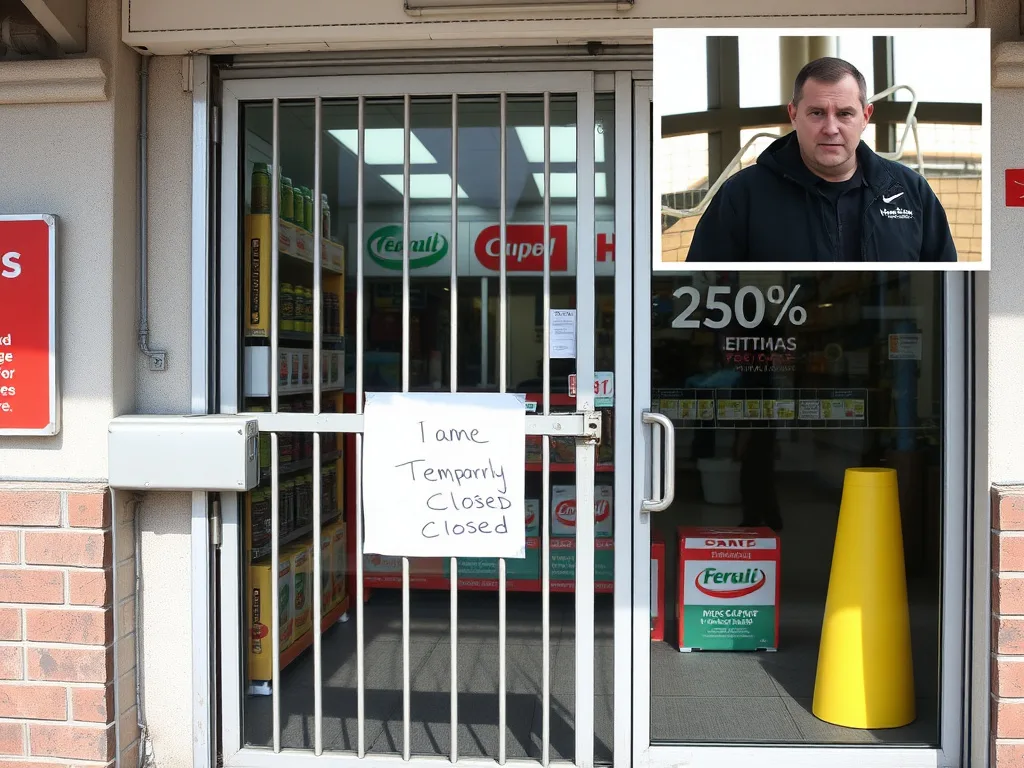
A bodega doesn't have to burn to the ground to be put out of business. A break-in that destroys the front door and register area, a grease fire in the deli station, a burst pipe that floods the stockroom, or a walk-in cooler compressor that fails overnight and takes out the entire refrigerated inventory — any one of these can shut a small store down for days or weeks. During that time, the rent is still due, payroll obligations may still apply, loan payments don't pause, and the money the store would have made simply isn't coming in. That's the gap business interruption insurance is built to close.
Business interruption insurance, sometimes called business income coverage, is not about paying to fix the building or replace stolen merchandise — that's what commercial property insurance and commercial crime insurance are for. Instead, it replaces the income the bodega would have earned if the covered event hadn't happened, and it helps keep ongoing fixed costs paid while the store is closed for repairs or restocking. For a small, cash-flow-sensitive operation like a bodega, this is frequently the coverage that determines whether the business reopens at all or quietly disappears after a bad month.
Bodegas are especially exposed to forced-closure events. The same factors that make convenience-style retail a frequent robbery target — cash on hand, late hours, high-turnover goods, often a single employee on shift — also mean these stores face a real chance of a covered event that shuts the doors. Add in aging refrigeration equipment running around the clock, older building stock in many urban commercial corridors, and dense city blocks where a neighboring fire or water event can knock out a store that did nothing wrong, and the case for business interruption coverage becomes hard to ignore. Most owners think first about the physical damage. Business interruption insurance is about the weeks after, when the shelves are empty and the register isn't ringing but the bills keep arriving on schedule.
What's covered
- Replaces lost net income based on your store's actual financial performance, using your accounting records to establish what the bodega would have earned during the interruption period.
- Continues covering ongoing fixed expenses that don't stop just because the store is closed, including rent or mortgage payments, loan payments, and in many cases payroll for key staff you want to keep on through the closure.
- Covers extra expenses incurred to reduce the length of the interruption or keep some revenue flowing, such as renting temporary refrigeration, expediting equipment repair, or operating from a limited-service setup while the main location is restored.
- Typically extends for a defined period of restoration, often up to 12 months depending on the policy, giving the store realistic time to rebuild inventory, restock, and ramp back up rather than a token few weeks.
- Works alongside commercial property, commercial crime, and equipment breakdown coverage so that a single event — a robbery, a fire, or a compressor failure — triggers a coordinated response instead of leaving income loss as an uncovered gap.
- Provides real financial breathing room during a period when many small, thinly capitalized retail operations otherwise have to draw down personal savings, max out credit, or lay off staff just to survive the closure.
Ideal for stores that…
- Bodegas and small grocery/convenience stores that could not comfortably absorb several weeks of zero revenue while still paying rent and staff
- Owners carrying a commercial lease with no built-in grace period for closures caused by damage or a covered loss
- Stores with employees on payroll who the owner wants to keep able to pay through a temporary shutdown
- Locations with walk-in coolers, freezers, or other equipment whose failure could force a full or partial closure while repairs are made
- Owners who have already invested in commercial property and commercial crime coverage but haven't addressed the income-loss gap those policies don't fill
- Bodegas in older buildings or dense urban blocks where fire, water damage, or a break-in affecting a shared structure is a realistic risk
What Counts as a Covered Interruption
Business interruption coverage is triggered by direct physical loss or damage from a cause your underlying property policy covers — it doesn't stand alone. In practice, for a bodega that most commonly means a fire, a robbery or break-in that damages the store to the point it can't operate, water damage from a burst pipe or storm, vandalism, or another covered peril that makes the space unusable or unsafe to run the business from.
It's important to understand what this coverage is not. A slow sales month, a supplier delivery delay, or a decision to close for renovations you chose to do isn't a covered interruption — there has to be a direct link to a covered physical loss. That's why business interruption insurance is typically added as part of a package alongside commercial property insurance rather than sold entirely on its own; the property claim establishes the covered event, and the business income portion picks up the income-and-expense side of that same loss.
- Fire or smoke damage that closes some or all of the store
- Robbery or break-in damage severe enough to halt operations
- Burst pipes, storm damage, or water intrusion
- Vandalism that makes the space unsafe or unusable
- Major equipment failure when paired with equipment breakdown coverage that extends business income protection to mechanical/electrical failures
How Lost Income Is Calculated
Because every bodega's sales pattern is different, business interruption claims are based on your own store's financial history rather than a flat industry number. Insurers typically look at prior sales records, tax returns, and accounting statements to project what the store would likely have earned during the interruption period had the loss not occurred, then account for any expenses that were avoided during the closure (for example, if you weren't restocking perishables during a full shutdown).
This is one of the most practical reasons to keep clean, current bookkeeping for your bodega even if you never expect to file a claim. A store with clear monthly sales records, POS data, and recent tax filings can typically settle a business income claim faster and with less back-and-forth than one relying on estimates. If you're not sure your current records would hold up in a claim, it's worth asking your bookkeeper or accountant what documentation the store should be keeping on a rolling basis.
Seasonal swings matter here too. A bodega that does noticeably more volume around certain holidays, paydays, or local events shouldn't be measured against a flat annual average — a well-documented claim accounts for the specific weeks or months the closure actually covered, so a shutdown during a historically strong sales period is valued differently than one during a slow stretch. Bringing prior-year sales data for the same calendar window to a claim discussion generally leads to a more accurate settlement than relying on a single yearly figure.
Ongoing Expenses That Keep Coming Due
The defining feature of business interruption insurance, compared to simply replacing lost sales, is that it also addresses the fixed costs that don't pause when the register goes quiet. Rent is usually the biggest one — most commercial leases don't include an automatic abatement clause for a robbery or fire, meaning the landlord still expects payment even if the space is unusable. Loan or equipment financing payments are similar: the bank doesn't wait for the store to reopen.
Payroll is often the hardest decision point for bodega owners without this coverage. Many owners want to keep at least their longest-tenured or most trusted employees on payroll through a closure so there's a team ready to reopen — but without business interruption coverage, that decision comes directly out of pocket during a period when the store has no income at all. Coverage that reimburses payroll during the restoration period removes that impossible choice and makes it realistic to bring the same staff back rather than start over with new hires.
- Rent or mortgage payments on the commercial space
- Loan payments on equipment, buildout financing, or the business itself
- Payroll for staff the owner wants to retain through the closure
- Utilities and other fixed operating costs that continue regardless of whether the store is open
- Taxes and licensing fees that remain due on their normal schedule
Extra Expense Coverage: Getting Back Open Faster
Many business interruption policies include an extra expense component, which covers reasonable costs incurred specifically to reduce the length or severity of the shutdown. For a bodega, that might mean renting a temporary refrigerated unit to preserve some inventory while a walk-in cooler is repaired, paying rush fees to get an HVAC or refrigeration technician on-site faster, or setting up a limited, reduced-footprint version of the store to keep some revenue coming in while the main space is restored.
This piece of the coverage rewards proactive owners. If spending a few hundred dollars on a temporary fix gets the store back to near-normal operations a week earlier than waiting for standard repair timelines, extra expense coverage is designed to reimburse that kind of decision — because it usually costs the insurer less than paying out a full week of additional lost income. For a bodega specifically, that might also cover things like temporary security measures or a rented storage trailer to protect salvageable inventory while the main space is being repaired, both of which help shorten the runway back to a fully reopened store.
Business Interruption and Bodegas' Forced-Closure Exposure
It's worth restating why this coverage matters more for bodegas than for many other small businesses. Convenience-style retail is consistently cited as one of the most frequently targeted categories of small business for robbery and burglary, largely due to cash on hand, late or overnight hours, high-turnover goods like tobacco, lottery, and beer/wine, and frequent solo staffing. On top of that crime exposure, bodegas run refrigeration and freezer equipment continuously, often in older buildings, which raises the odds of a mechanical failure or a fire-related incident compared to a business that doesn't depend on always-on equipment.
Put together, that means a bodega faces a meaningfully higher-than-average chance of experiencing one of the exact events — robbery, fire, major equipment failure — that trigger a forced, unplanned closure. Pairing business interruption coverage with commercial crime insurance and commercial property insurance builds a more complete picture: the crime and property policies address the physical loss and theft, and the business interruption coverage addresses what happens to the store's finances while it's closed getting back on its feet.
What determines the cost of this coverage
Every bodega is different. Here's what typically moves the price of this coverage up or down.
Revenue and profit margin
Higher-revenue stores generally need a higher business income limit to fully replace what would be lost during a realistic closure period, which affects premium.
Restoration period selected
Longer maximum coverage periods (for example, 12 months versus a shorter term) provide more cushion for a serious rebuild but typically cost more.
Underlying property and crime exposure
Because business interruption is tied to your property and crime coverage, factors like building age, security measures, and location risk that affect those policies also influence this one.
Payroll and fixed-expense obligations
Stores with more employees on payroll or higher fixed monthly obligations (rent, loans) generally need higher coverage limits to fully bridge a closure.
FAQs about Business Interruption
Business interruption coverage is generally triggered by physical loss or damage from a covered event, so a robbery that results in stolen cash or merchandise but leaves the store fully operable typically wouldn't trigger a business income claim on its own — that loss is addressed by commercial crime insurance instead. If the same robbery also damages the storefront, register area, or security systems badly enough to force a temporary closure, the property damage from that event can trigger business interruption coverage for the resulting downtime. A licensed agent can walk through how your specific policies would respond to a given scenario.
Most policies cover a defined "period of restoration" — the time it reasonably takes to repair or replace damaged property and get the business back to normal operations — which can extend up to 12 months depending on the policy and limits chosen. The exact length and any sub-limits vary by carrier and by the coverage you select, so it's worth confirming your specific restoration period when reviewing quotes.
Many business interruption policies allow ongoing payroll for retained employees to be included as part of the covered ongoing expenses during a closure, in addition to rent, loan payments, and other continuing obligations. Whether payroll is included and at what level depends on the specific policy and limits, so it's worth confirming this explicitly when setting up or reviewing your coverage.
Yes — they cover different things. Commercial property insurance pays to repair or replace the physical building, inventory, and equipment that were damaged. It does not replace the income you lose while the store is closed, or cover rent and payroll obligations that continue during that closure. Business interruption coverage is specifically built to fill that income-and-expense gap, and for a bodega with real forced-closure exposure from robbery, fire, or equipment failure, the two coverages are meant to work together rather than substitute for one another.
There's no single number — it depends on your store's typical monthly revenue and profit, your fixed monthly obligations like rent and payroll, and how long a realistic closure and rebuild might take for your specific location and equipment setup. A useful starting point is estimating what it would cost to keep the business's bills paid and staff retained for one to three months with zero sales coming in, then discussing that figure against real coverage options with a licensed agent. Request a free quote to get store-specific numbers rather than relying on a generic estimate.
Related coverages to consider

Get your free business interruption quote
Tell us about your store and we'll put together a clear, no-obligation quote — coverage built around how a bodega actually operates.